This post may contain Amazon or other affiliate links. If you purchase something through the link, I may receive a small commission to help to support this site at no extra charge to you.
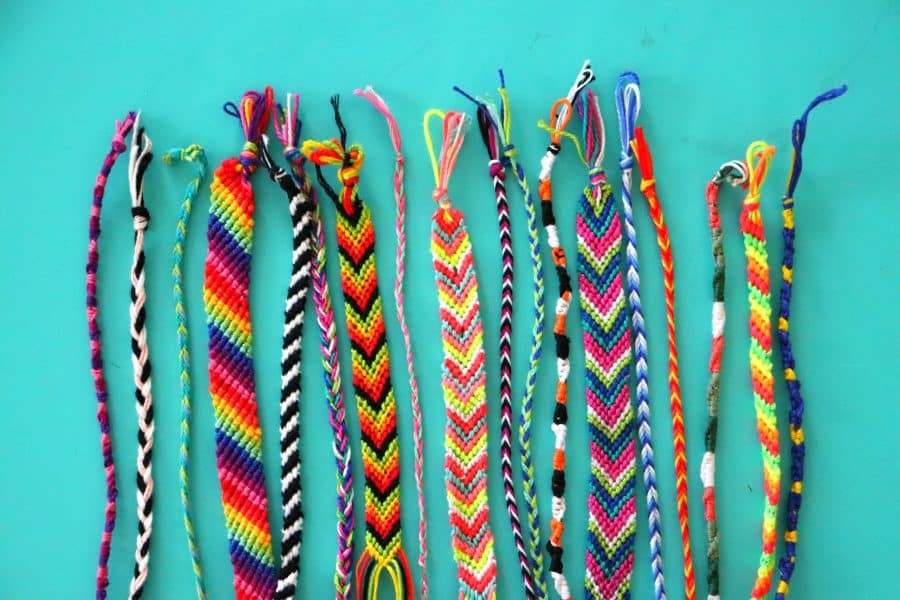
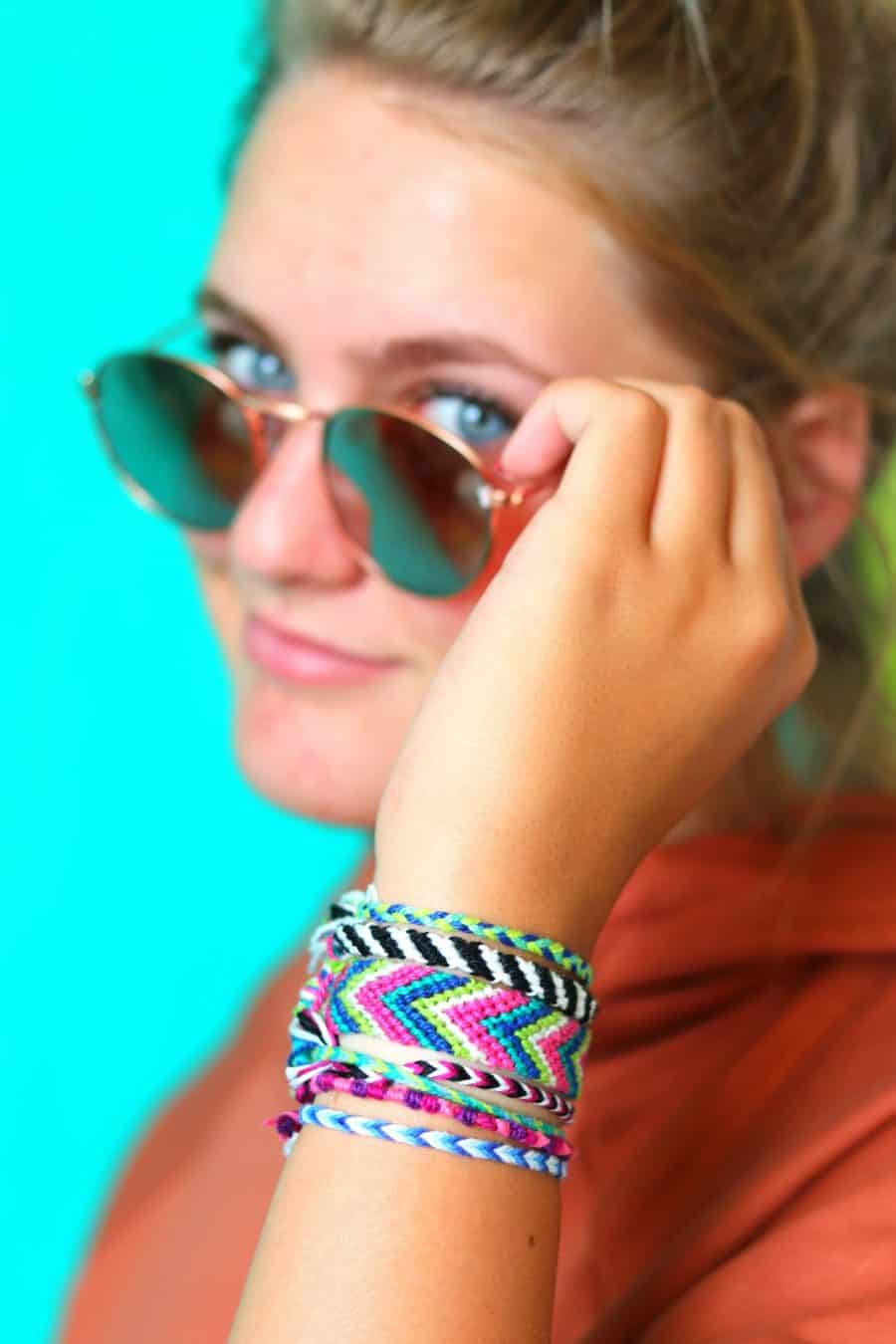
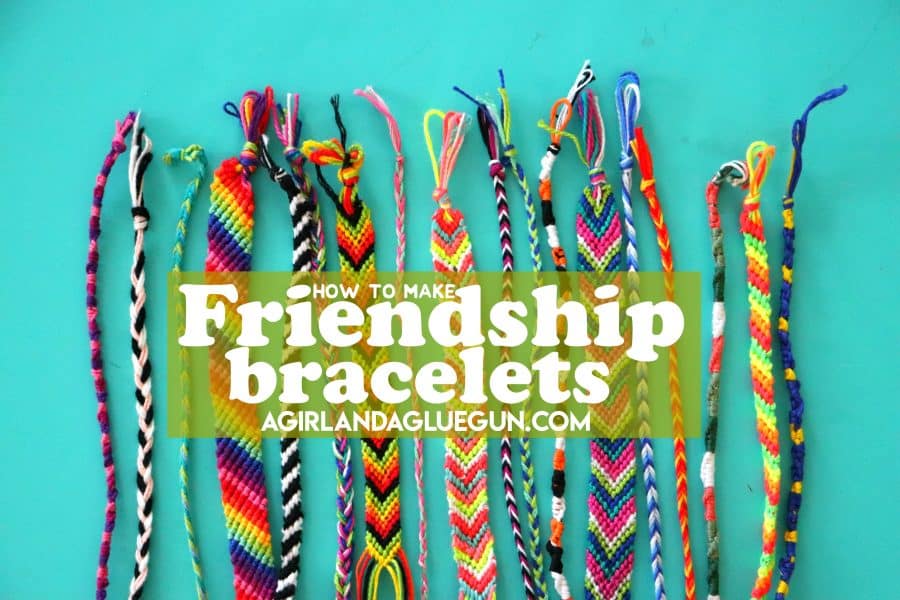
Looking for an easy friendship bracelet tutorial? Grab some embroidery floss and make one of these four fun friendship bracelet patterns! These DIY friendship bracelets range from a simple braid to a more detailed chevron pattern, so there is an option for every skill level.
Friendship bracelets are a great craft for kids, tweens, teens, summer camps, sleepovers, birthday parties, and even Cub Scouts. Once you learn the basic techniques, you can mix and match colors and create all kinds of colorful bracelets.
In this tutorial, I’ll show you four different ways to make friendship bracelets—starting with the easiest and working up to a more advanced woven bracelet.
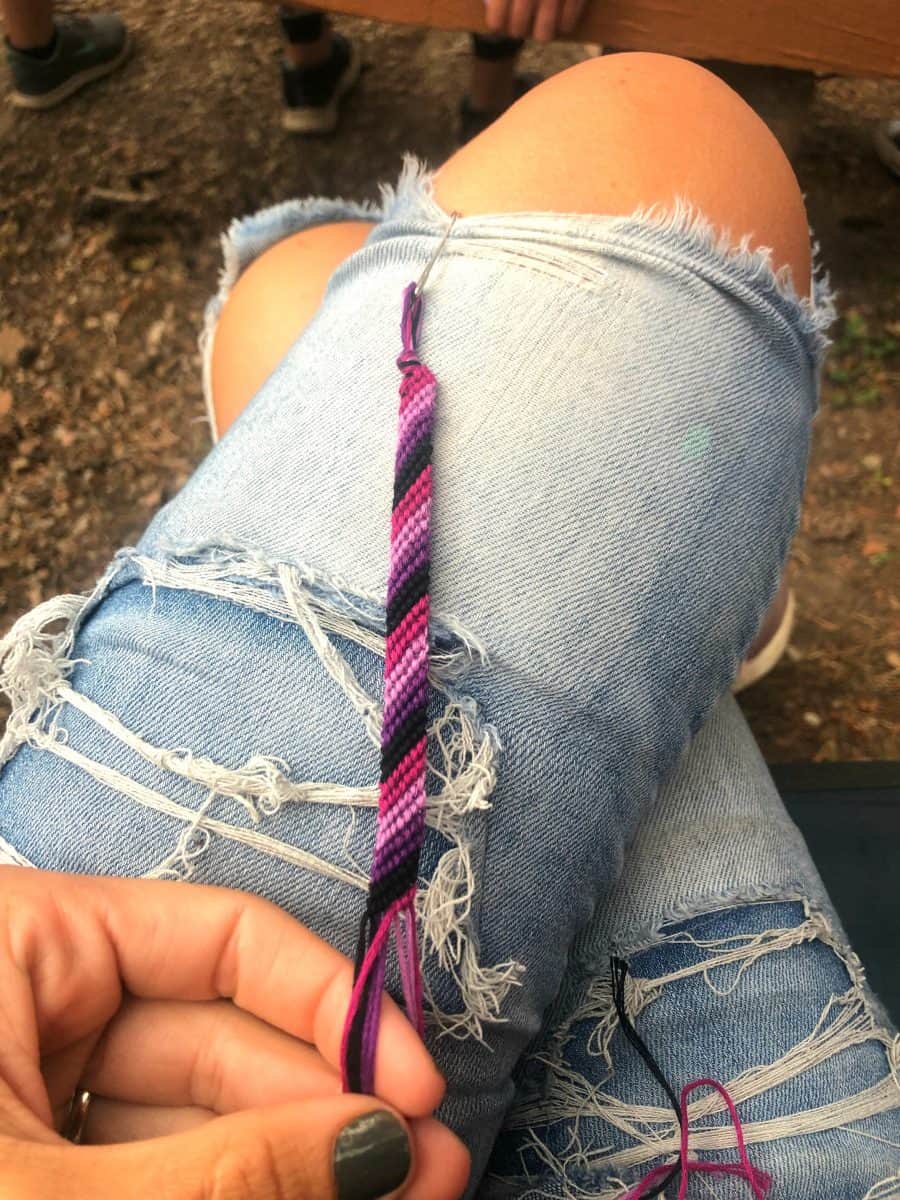
In the video above, I show you how I keep the embroidery floss in place while making the bracelets. I usually tape the bracelet to my desk, but there are a few other options.
You can also:
Clip the bracelet to a clipboard.
Pin the top of the bracelet to your clothing if you’re making one while you’re on the go.
Use a small piece of tape to hold the threads in place while you work.
What You Need to Make Friendship Bracelets
The supplies for these DIY friendship bracelets are simple:
The fun part is choosing your colors! Use your favorite colors, school colors, rainbow colors, or a combination of colors that match your personality.
There are 4 different bracelet techniques–starting with pretty basic and then getting harder as you go!
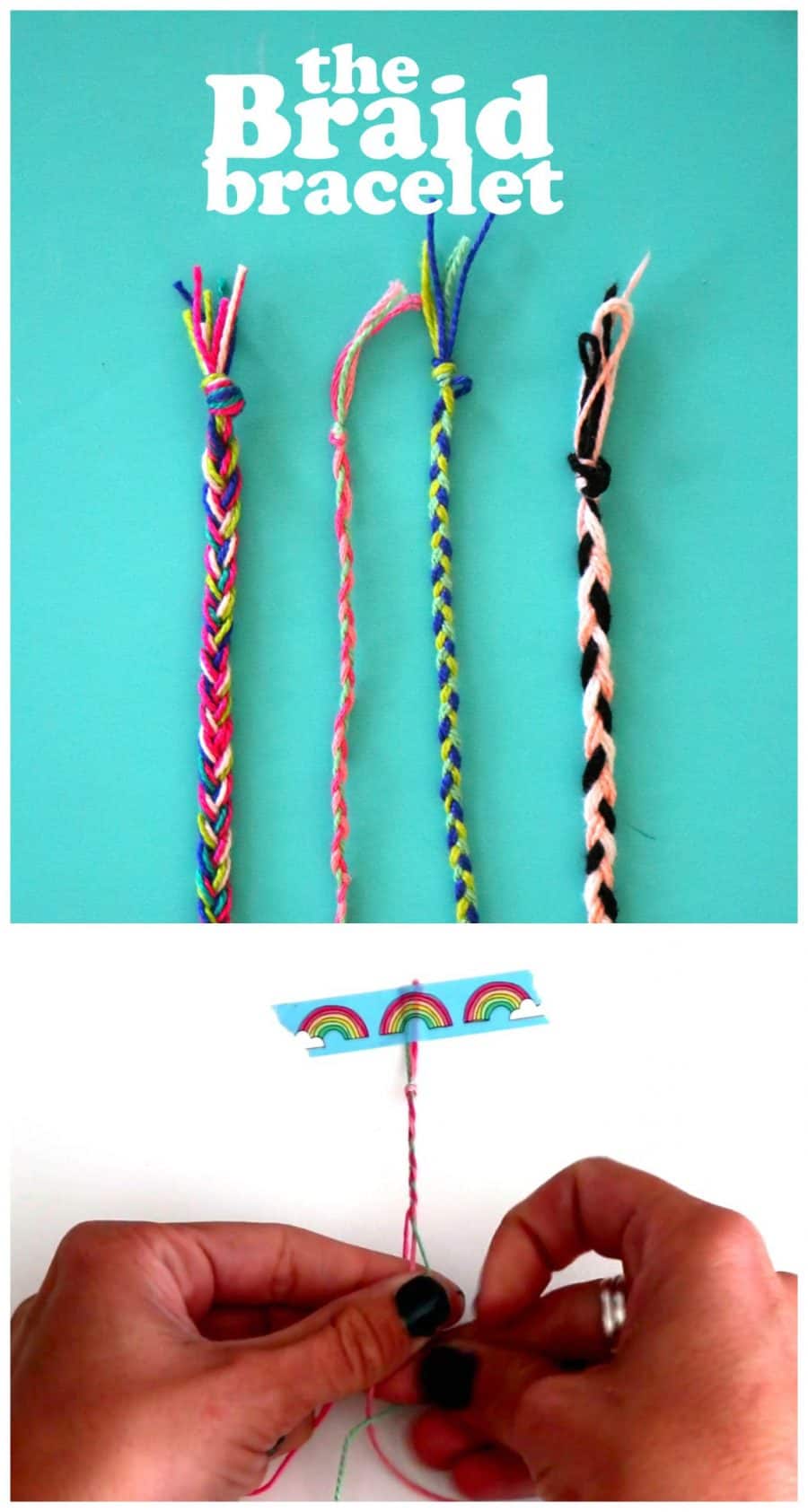
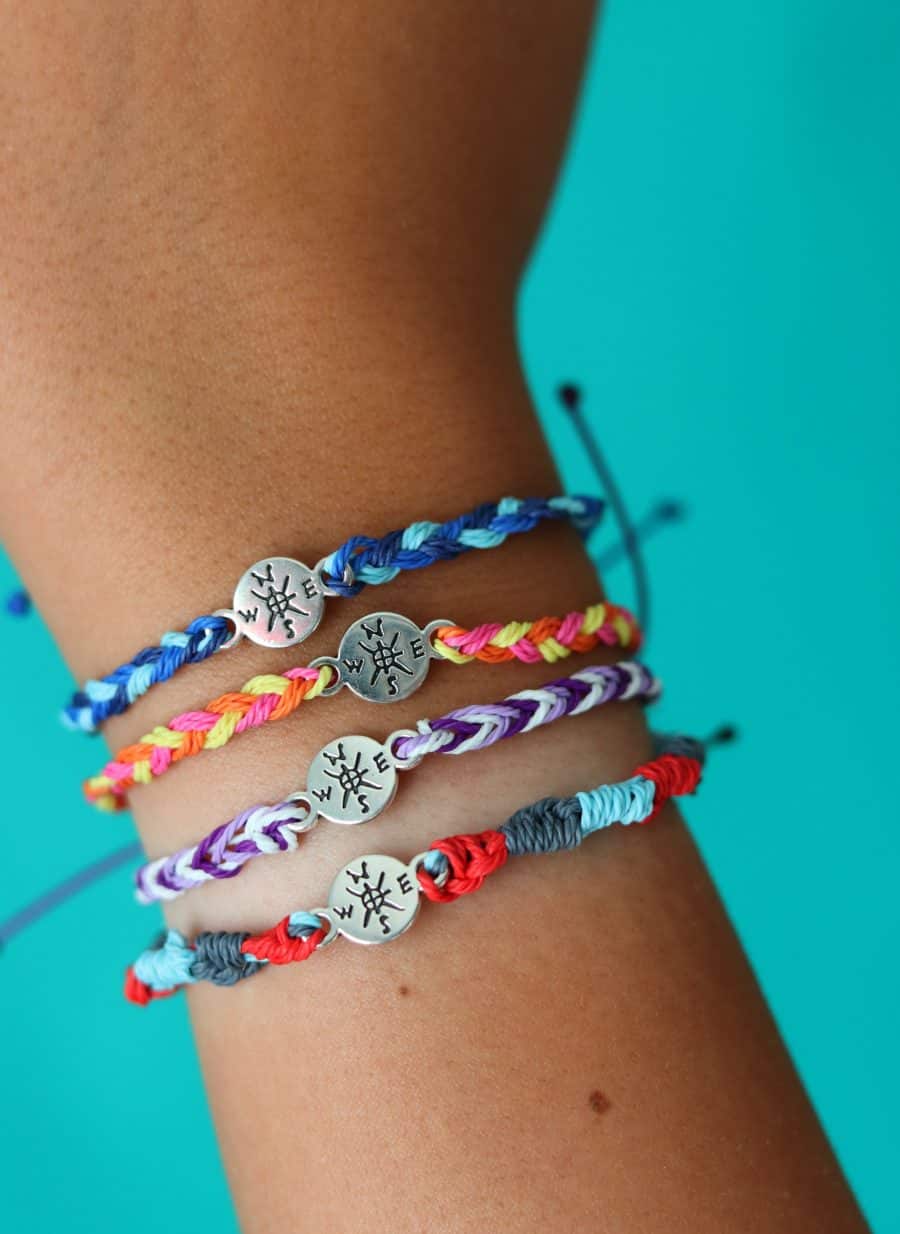
1: Easy Braided Friendship Bracelet pattern
If you’re looking for a super easy friendship bracelet for beginners, start with a simple braid.
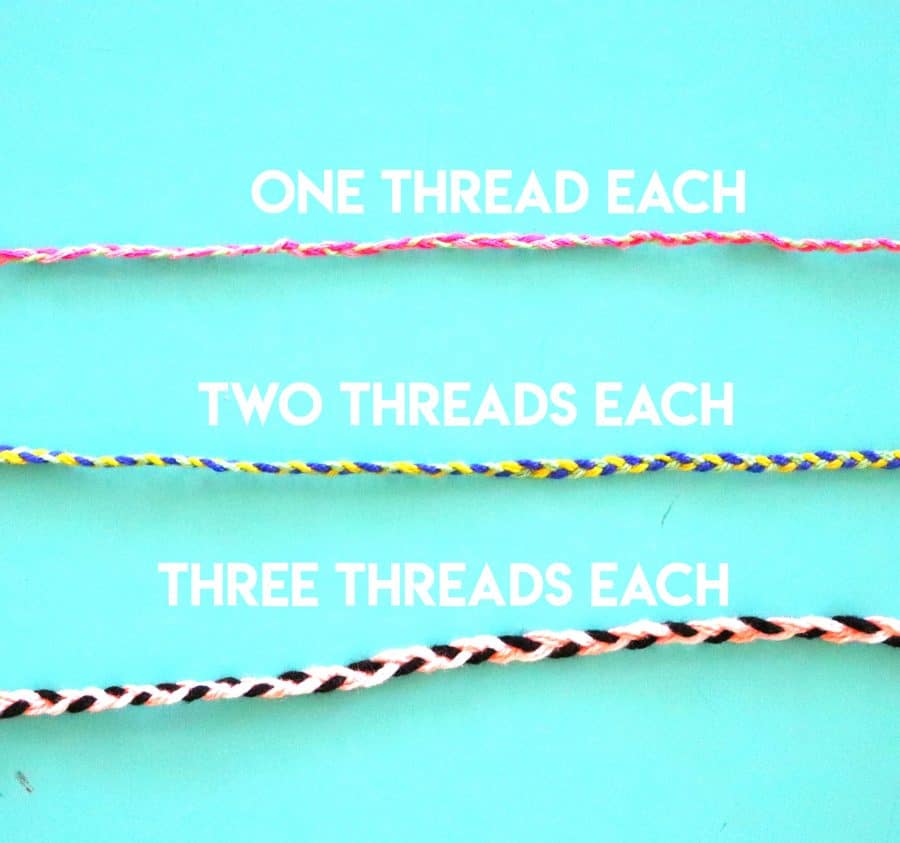
This is also a great bracelet technique for kids who are learning how to braid. The finished bracelet can look completely different depending on how many strands of embroidery floss you use.
The more strands you add, the thicker your bracelet will be.
This is a great first friendship bracelet pattern because there are no complicated knots or weaving techniques to learn. Simply divide your embroidery floss into three sections and braid them together.
Once you reach your desired bracelet length, tie the ends together.
Tip: Experiment with different numbers of strands to make thin, delicate bracelets or thicker, chunkier bracelets.
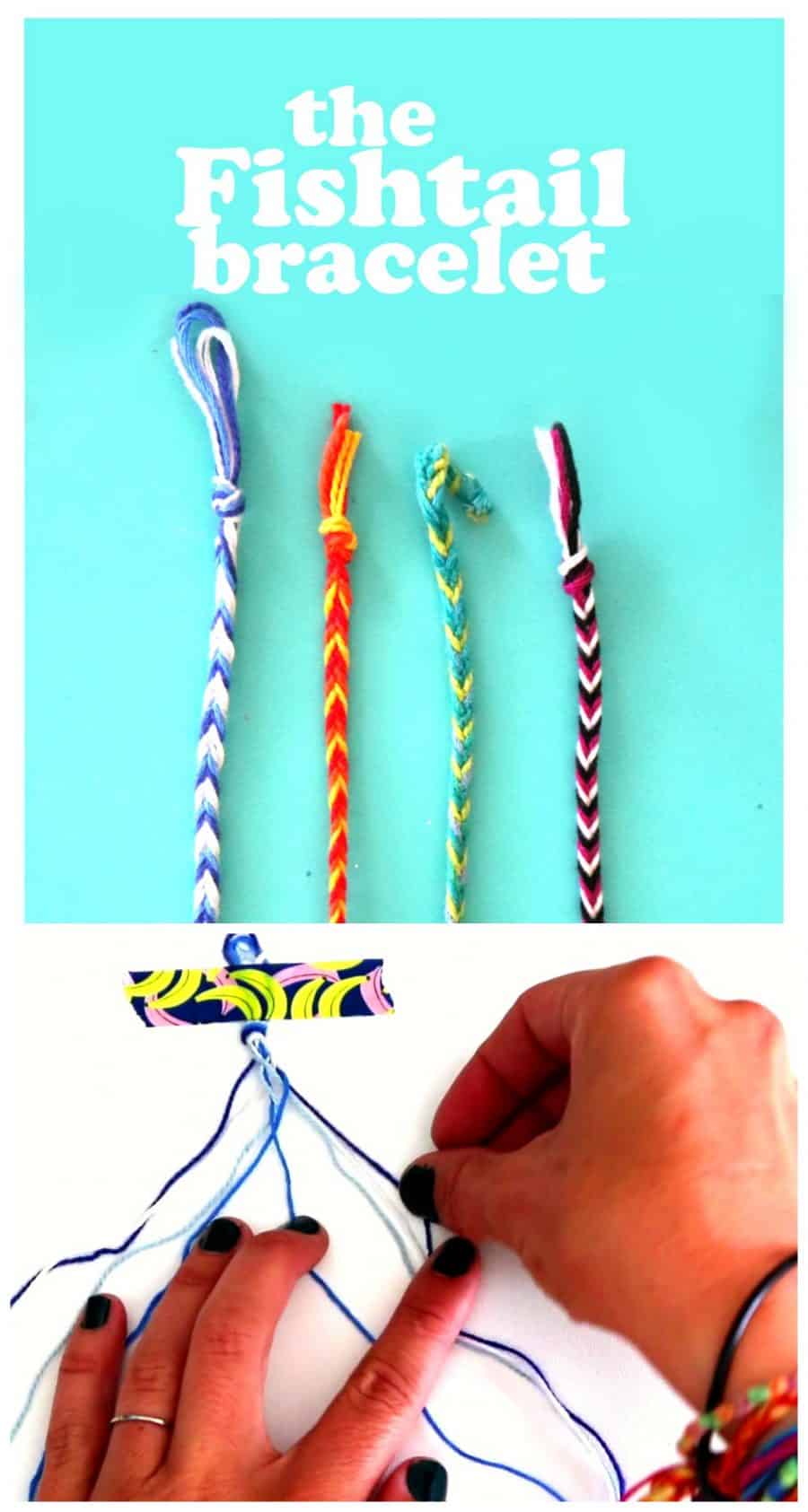
2: The Fishtail Bracelet
The fishtail friendship bracelet is one of my favorites because it looks much more complicated than it actually is!
The finished bracelet has a pretty woven appearance, making it a fun step up from the basic braid.
For this pattern, you can use as many colors as you’d like. The important thing is that you have two strands of each color so they can be woven together.
This is another great friendship bracelet pattern for kids because once you understand the basic pattern, you can make it over and over again with different color combinations.
Try making a rainbow fishtail bracelet, using your favorite colors, or creating bracelets in your school colors.
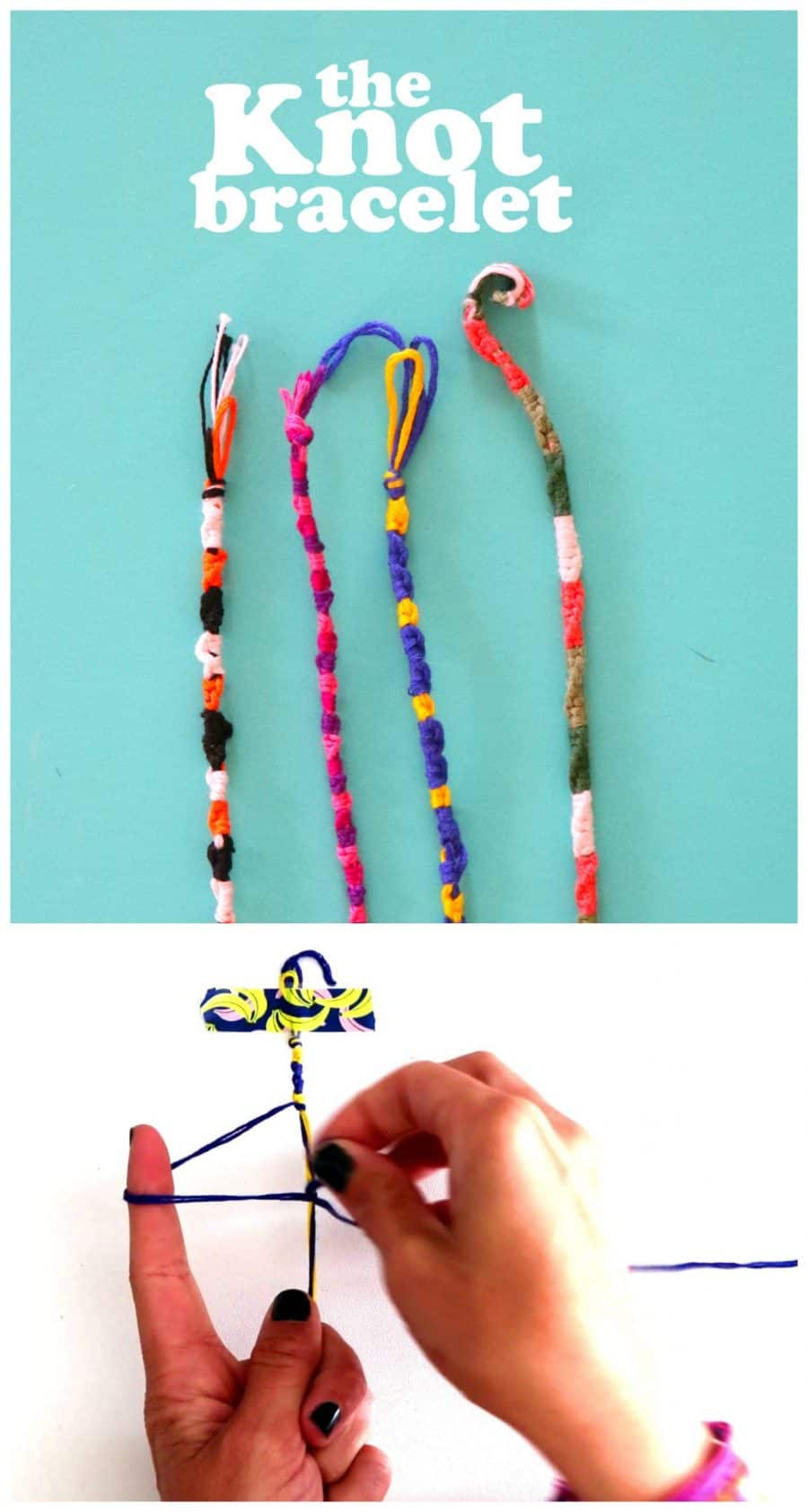
This knotted bracelet is another easy option and is a great one to learn before moving on to a more complicated woven bracelet.
The knot used in this bracelet is similar to the knot you’ll use when making the chevron bracelet later in this tutorial.
You can use multiple colors and as many strands as you’d like. Just keep in mind that you’ll want longer pieces of embroidery floss for this bracelet.
The more colors and strands you use, the fuller your finished bracelet will look.
This pattern is a fun way to practice your knots before moving on to the chevron friendship bracelet.
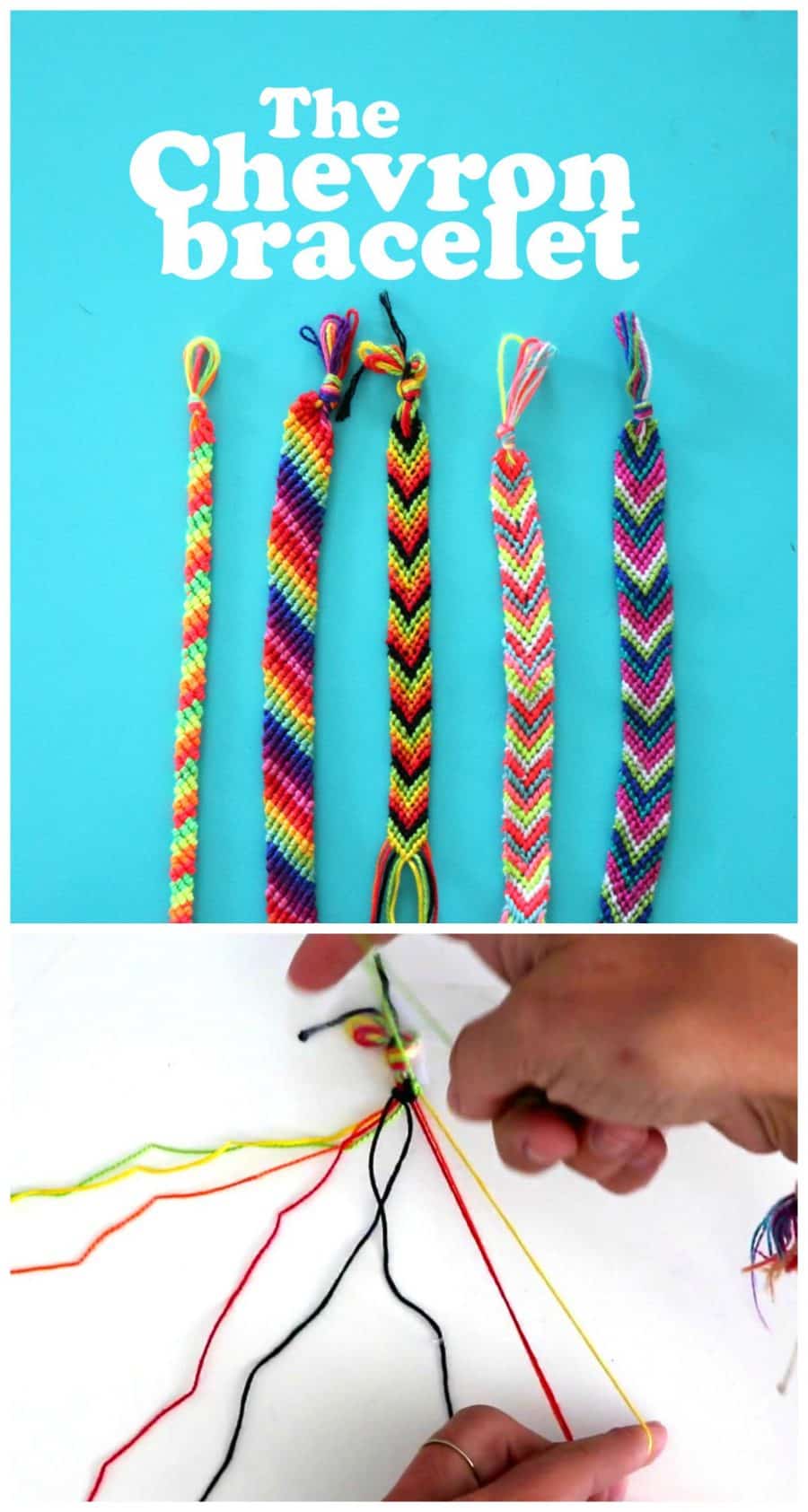
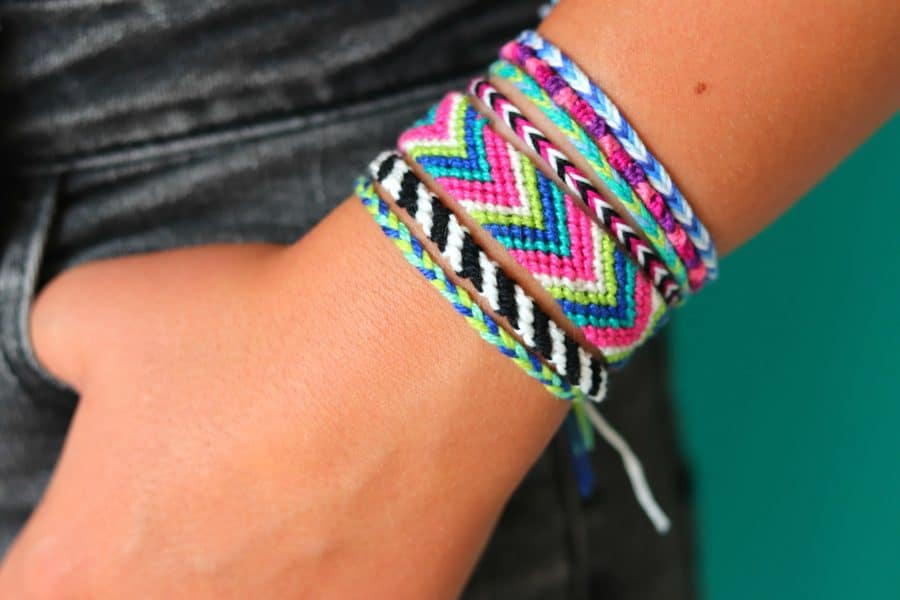
4. Chevron (weave) Bracelet
Ready for a little more of a challenge? Try making a chevron friendship bracelet!
This is probably the most time-consuming of the four patterns, but the finished bracelet is definitely worth the effort.
For a classic chevron bracelet, use two strands of each color. I usually cut my embroidery floss to about 4 feet long so I have plenty of thread to work with.
The chevron pattern is created by repeating a series of knots. As the knots build, the threads form the classic V-shaped pattern that makes this bracelet so recognizable.
Once you get the hang of the knot, you can experiment with different numbers of colors and create your own combinations.
Tip: Don’t be afraid to use extra-long pieces of embroidery floss when you’re first learning. Running out of thread in the middle of a bracelet is no fun!
How to Finish a Friendship Bracelet
Once you’ve finished your friendship bracelet pattern, you have a couple of options for securing it.
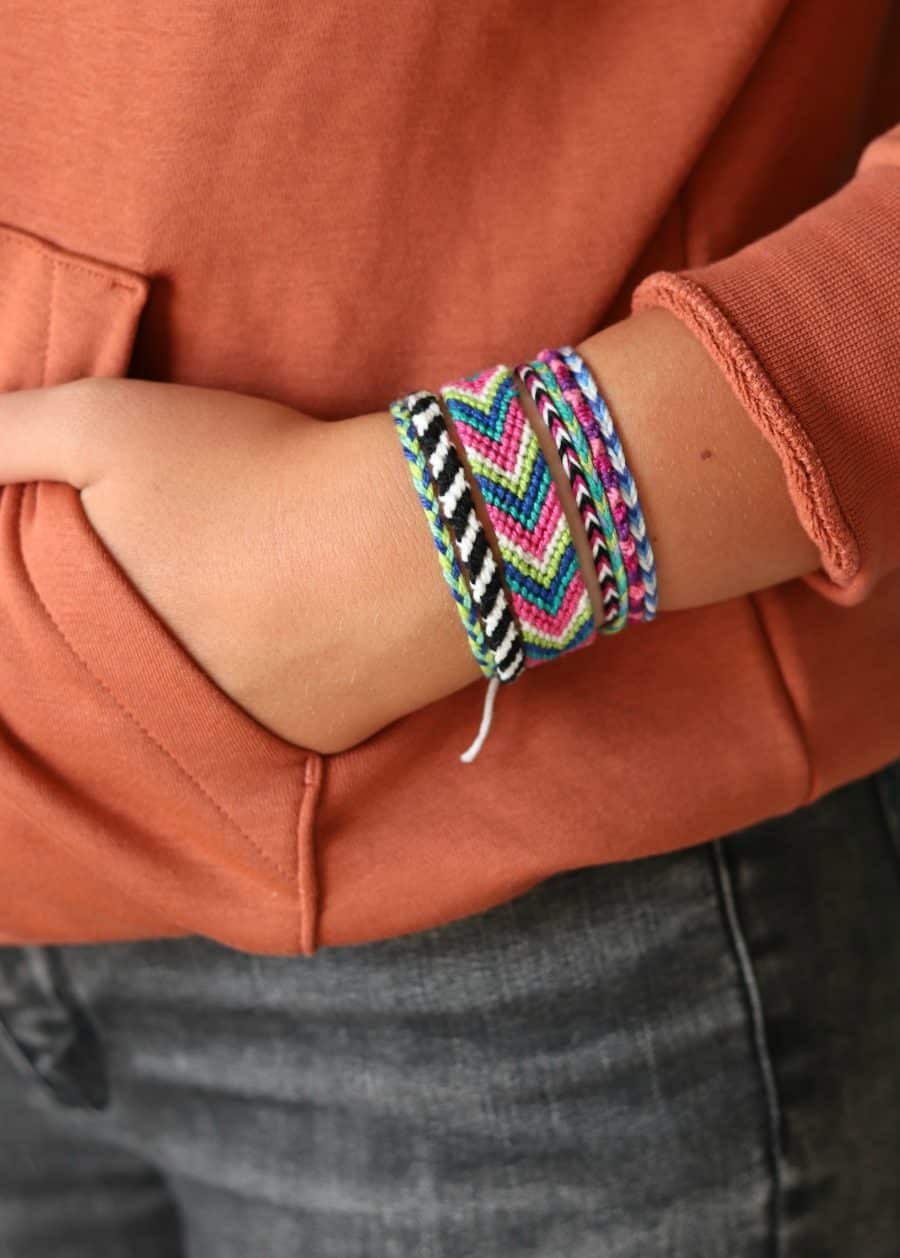
The easiest option is to simply tie the ends around your wrist.
If you’d like a bracelet that is easier to put on and take off, you can create a loop at the beginning of the bracelet and finish it with a knot that can be pulled through the loop.
After each bracelet is done–I usually just tie it on the wrist. BUT you can do the hoop at the top (I show you in the video) and then add a knot to loop it through!
The Friendship Bracelet Wish
There is a fun old tradition that says when you tie a friendship bracelet onto someone’s wrist, you can make a wish.
The bracelet is worn until it naturally falls off, and legend says that when the bracelet falls off, your wish will come true!
I always like to tell kids this when we’re making friendship bracelets together. That way, if they eventually notice that their bracelet has fallen off, they don’t have to be sad about losing it. According to the tradition, that’s actually a good thing!
What Can You Do With Friendship Bracelets?
Friendship bracelets aren’t just for wearing on your wrist. Once you’ve made a few, there are lots of fun ways to use them.
Try adding them to:
Backpacks
Zippers
Jackets
Keychains
Bookmarks
Pencil cases
Gifts for friends
Summer camp crafts
Sleepover craft projects
You can also make several bracelets at once and give them to friends as handmade gifts.
More Easy Kids Crafts
If you enjoyed making these DIY friendship bracelets, be sure to check out some of my other fun craft ideas for kids.
Friendship bracelets are especially fun for summer crafts, camp crafts, sleepover activities, and rainy day projects because you only need a few inexpensive supplies.
Frequently Asked Questions About Friendship Bracelets
What kind of thread do you use for friendship bracelets?
Embroidery floss is the most common material for making friendship bracelets. It comes in tons of colors and is easy to knot, braid, and weave.
How much embroidery floss do I need for a friendship bracelet?
The amount of embroidery floss you need depends on the bracelet pattern and how many strands you use. For the chevron bracelet in this tutorial, I usually start with about 4 feet of thread per strand so I don’t run out.
What is the easiest friendship bracelet to make?
A simple braided friendship bracelet is one of the easiest patterns for beginners. Once you’ve mastered the braid, try a fishtail pattern and then move on to knotted and chevron bracelets.
Are friendship bracelets a good craft for kids?
Yes! Friendship bracelets are a fun craft for kids, tweens, and teens. Simple braiding and knotting patterns are especially good for beginners and can also be used for summer camps, Scouts, parties, and group craft activities.
Make Your Own Friendship Bracelets!
Grab some colorful embroidery floss and start making your own DIY friendship bracelets! With four different patterns to choose from, you can start with a simple braid and work your way up to a classic chevron bracelet.
Which friendship bracelet pattern is your favorite?
A girl and a glue gun is a participant in the Amazon Services LLC Associates Program, an affiliate advertising program designed to provide a means for sites to earn advertising fees by advertising and linking to amazon.com.
"This site uses cookies from Google to deliver its services and analyze traffic. Your IP address and user-agent are shared with Google along with performance and security metrics to ensure quality of service, generate usage statistics, and to detect and address abuse."

Leave a Reply